
How to Choose a High-Quality Live Casino Table Online
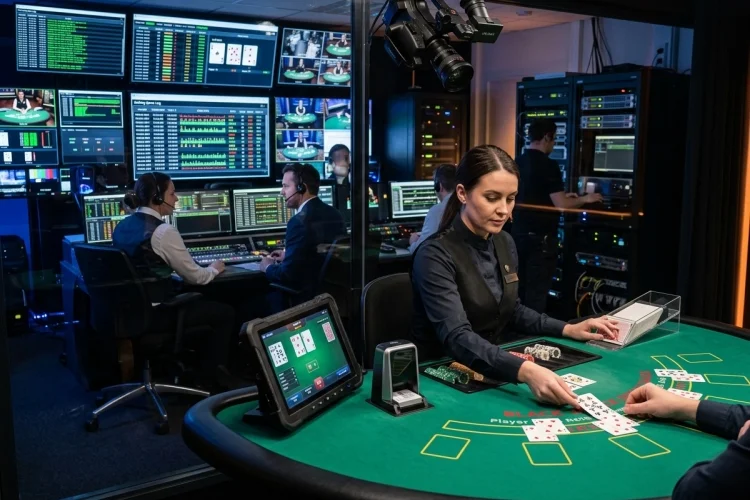
A live casino table is both a gambling product and a real-time digital broadcast. The dealer, studio equipment, casino software, internet connection, and user interface must work together for every round to operate smoothly.
This combination makes quality evaluation more complicated than simply checking whether a video looks sharp. A table can have attractive lighting but confusing betting controls.
Another may offer professional dealers but use stakes that do not fit a casual budget. Technical delays may also create uncertainty about whether a wager was accepted before betting closed.
Learning how to choose a high-quality live casino table is therefore a matter of testing the full experience.
Players should examine streaming performance, mobile compatibility, camera coverage, betting speed, table capacity, interface design, and procedures for interrupted games. The goal is not to find a table that promises better luck.
Quality technology cannot remove the house advantage. Instead, the objective is to select a game that presents outcomes clearly, records wagers correctly, and allows informed decisions within a controlled entertainment budget.
Start With Streaming Performance
High-definition video is useful only when the stream remains stable. A quality table should show cards, chips, roulette pockets, dice, and dealer actions without frequent pixelation or freezing.
Audio should remain synchronized with the video. When the dealer announces that betting is closed, the interface and visible action should reflect the same stage of the round.
Live casino suppliers use studio-style production equipment. Evolution describes its studios as advanced broadcast environments with multi-camera, audio, lighting, and information technology systems.
Provider capabilities are only part of the result. Your device, internet speed, browser, and the casino’s integration can also influence performance.
Compare Camera Angles and Visual Clarity
The main camera should provide an uninterrupted view of the table. Additional angles may show card close-ups, wheel results, dealer trays, or game-show equipment.
More cameras do not automatically mean better quality. Each view should serve a clear purpose and should not hide essential actions behind animations or promotional overlays.
For card games, suit and rank must be readable without relying entirely on digital graphics. For roulette, the final ball position should be visible alongside the confirmed result.
Regulated live studios may be required to maintain detailed video surveillance covering dealer activities and gaming areas. Such recordings help confirm whether dealing procedures and game rules were followed during a disputed round.
Test the Table on Your Preferred Device
A desktop interface has more room for video, statistics, chat, and betting controls. On a smartphone, those elements must fit a much smaller display.
Before wagering, test portrait and landscape modes. Confirm that chip values, betting areas, timers, rules, and balance information remain readable.
The touch controls should be large enough to reduce accidental selections. A bet should not be submitted merely because the user attempted to scroll, resize the video, or close a panel.
Live casino products are commonly designed for phones, tablets, and computers, but availability and performance can depend on local regulations and the casino carrying the game.
Use a reliable private connection. Public Wi-Fi can introduce both security concerns and unstable performance.
Examine the Betting Window
Live tables use a limited period during which wagers can be submitted. The countdown should be visible, consistent, and long enough for the decisions required by the game.
A standard roulette wager may be simple, while placing several inside bets can take more time. Blackjack also requires later decisions such as hitting, standing, splitting, or doubling.
Fast or speed tables shorten the round cycle. They may suit experienced players, but they also increase the number of possible wagers within a session.
Faster play does not improve the odds. It can increase total turnover because more rounds are completed in the same amount of time.
Choose a pace that allows you to review each stake rather than rushing to beat the countdown.
Confirm That Transactions Are Clear
A high-quality table should show the selected chip value, individual bets, total stake, remaining balance, accepted wager, result, and payout.
The player should be able to distinguish between a chip placed on the layout and a wager that has been successfully registered. When betting closes, late selections should be rejected clearly instead of creating uncertainty.
UK remote-gambling standards require systems to display the monetary value and content of a gamble before commitment. This includes unit stakes, total stakes, and any conversion between currency and casino chips or credits.
Review the game history after a few rounds. It should contain enough information to identify completed wagers and outcomes.
Understand Interrupted-Game Procedures
Live streams can disconnect because of internet failures, software problems, power interruptions, or studio incidents. The rules should explain what happens to accepted wagers in these situations.
A temporary video interruption does not necessarily mean the physical game stopped. The result may still be completed and settled if the studio and betting system continued operating correctly.
Check whether the interface reconnects automatically and whether the completed outcome appears in the transaction history. Contact support when a stake is deducted without a clear result.
A well-managed table should not ask the player to rely only on memory or a screenshot of the video. Logged game events and studio records are important for reviewing disputed rounds.
UK live-dealer standards specifically call for game logs and performance statistics.
Match the Limits and Speed to Your Budget
Betting limits should be considered together with the pace of play. A $5 minimum may appear modest, but fifty rounds would create $250 in turnover before accounting for wins.
Side bets can increase the total stake substantially. A blackjack table advertised with a low minimum may allow several optional wagers during every hand.
Calculate the possible cost of a typical session before joining. The casino interface should display the complete stake rather than emphasizing only the smallest available chip.
Use reality checks or session reminders to track time. UK technical rules require remote operators to provide facilities that help customers monitor elapsed play.
A technically strong live casino table provides more than high-resolution video. It combines stable streaming, useful camera angles, readable mobile controls, sufficient decision time, accurate transaction displays, and clear procedures for interrupted games.
Test the table before wagering whenever viewing mode is available. Confirm that important game actions can be seen, the audio matches the stream, and every accepted bet appears in the account history.
Select a pace and minimum stake that fit your predetermined budget. Avoid speed tables when the shorter countdown causes rushed decisions, and do not let a rapid game cycle increase spending unnoticed.
Good technology should make the game easier to understand – not make the financial commitment easier to overlook.