
Live Casino

Live Casino

Low-Latency Streaming Architecture in Live Casino Platforms

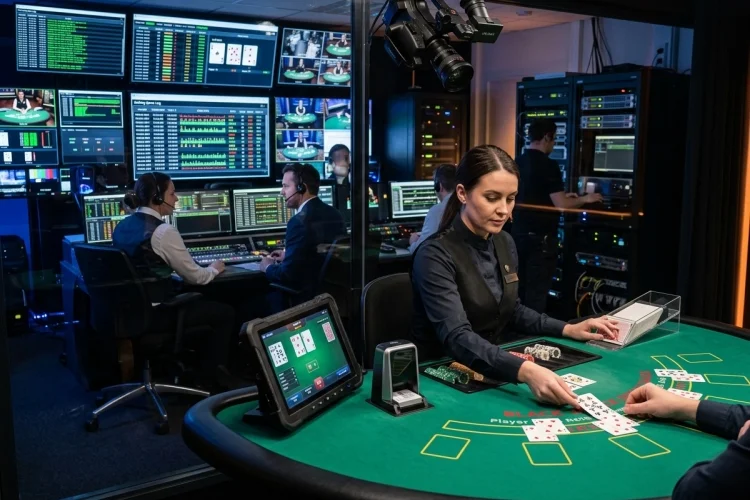
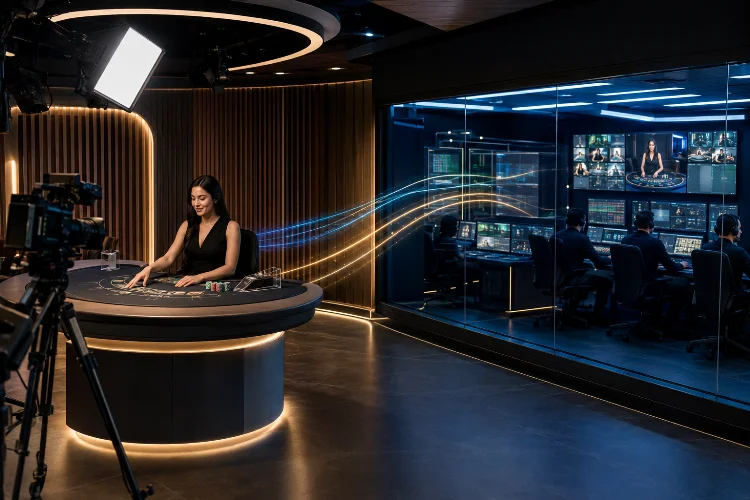
Watching a live dealer flip a card on your phone feels almost instantaneous. Behind that simple moment, however, a surprisingly complex network of cameras, encoders, servers, streaming protocols, game engines, and player interfaces is working together.

A modern Low-Latency Streaming Architecture is especially important for Live Casino Platforms because video cannot behave like an ordinary movie stream. Players may need to see a dealer action, receive the updated game state, and respond within a limited betting window.

Amazon defines end-to-end streaming latency as the time between camera capture and appearance on the viewer’s screen, with its low-latency IVS service designed for delivery below five seconds under appropriate conditions.

The real engineering challenge is not simply making video fast. It is keeping video, game data, and player interaction correctly synchronised.

The Journey Begins Inside the Live Studio

Every live stream begins with capture.

Multiple cameras may cover the dealer, table, cards, wheel, or other physical equipment. The resulting video must then be encoded into a compressed format suitable for transmission across the internet.

Encoding matters because raw professional video would require enormous bandwidth. Compression reduces that data while trying to preserve enough quality for players to clearly follow the game.

The encoder then sends the stream toward an ingest endpoint. Cloud live-streaming systems commonly accept protocols designed for reliable contribution from the broadcaster to the streaming infrastructure. Amazon IVS, for example, supports several media-transmission technologies in its streaming environment, including RTMP(S), SRT, and WebRTC depending on the workflow.

At this stage, milliseconds begin accumulating.

Camera processing, encoding, networking, and server ingestion all contribute to the final latency budget.

Encoding Settings Can Add Hidden Delay

Video encoding is not instant.

An encoder needs enough information to compress frames efficiently, and some techniques can increase delay because frames may need to be analysed together.

That creates a trade-off.

Aggressive compression can save bandwidth but increase processing complexity. Extremely lightweight encoding can reduce latency but require more network capacity or compromise picture quality.

Amazon’s guidance for low-latency streaming specifically recommends configuring the encoder carefully and avoiding unnecessary forwarding services because additional components can increase latency.

This makes the architecture similar to a chain.

Adding just 300 milliseconds at several seperate stages can eventually create a noticeable delay for the player.

Good latency engineering therefore focuses on the whole pipeline rather than obsessing over one component.

Traditional HLS and Low-Latency HLS Solve Different Problems

HTTP Live Streaming, commonly known as HLS, became popular partly because it scales well across large audiences.

Traditional streaming approaches often buffer chunks of video before delivering them. That improves stability, but waiting for larger media segments can create several seconds of delay.

Low-Latency HLS changes this model.

Apple says LL-HLS extends standard HLS to reduce streaming delay while maintaining scalability over public networks. Apple has also demonstrated implementations targeting approximately two seconds or less of delay under suitable conditions.

Instead of waiting for a complete long media segment, LL-HLS can make smaller portions available earlier.

For casino-style interactive viewing, that difference matters.

If the dealer reveals a card at 20:00:00 but the player does not see it until 20:00:12, the interface will feel detached from the physical game.

Reducing that gap makes interaction feel much more natural.

WebRTC Pushes Toward Real-Time Communication

When even lower latency is needed, WebRTC becomes another important architectural option.

WebRTC is an open standard designed for sending audio, video, and generic application data between browsers or other compatible devices in real time.

Unlike conventional broadcast streaming, WebRTC was designed around interactive communication.

That makes it useful for experiences where participants need to see and react to one another quickly.

AWS illustrates the difference clearly: its low-latency channels target under five seconds, while its real-time stages can operate below 300 milliseconds under supported conditions.

That does not mean every casino stream should automatically use WebRTC.

Delivering one stream to hundreds of thousands of passive viewers creates different scaling requirements from supporting a smaller number of highly interactive participants.

Architecture therefore depends on the desired balance between latency, cost, scalability, and reliability.

Edge Distribution Shortens the Network Journey

Imagine a studio in Europe sending video to a player in Southeast Asia.

Routing every playback request back to one central server would create unnecessary distance and congestion.

Large-scale streaming systems solve this by distributing content closer to viewers through edge infrastructure.

Conceptually, the path becomes:

Studio → Ingest → Processing → Distribution Network → Nearby Edge → Player

The shorter final journey can improve playback performance and reduce network dependancy.

Location is still important. AWS notes that observed latency can vary based on broadcaster and viewer geography, network speed, streaming protocols, and individual components in the delivery chain.

This explains why two players watching the same game may experience slightly different delays.

Low latency is not one fixed number experienced identically by everybody.

Game Data Must Travel With the Video

Video is only half of a live casino experience.

The platform also needs structured information about the game.

A blackjack interface may display cards, hand totals, betting controls, timers, and results. Baccarat may show Player and Banker outcomes. Roulette may display the latest winning number and betting phase.

If these interface events arrive too early or too late relative to the video, players notice the mismatch.

One solution is timed metadata.

Amazon IVS supports timestamped metadata that can be inserted into a stream and synchronised with particular audio or video frames. Client applications can then use those metadata events to trigger interface actions at the appropriate moment.

A simplified workflow might be:

Dealer reveals card → system recognises event → game server validates it → metadata is timestamped → player interface updates

The important word is synchronised.

Fast data with slow video is not enough. Fast video with delayed game-state data is not enough either.

They need to remain aligned.

Adaptive Bitrate Protects Players on Unstable Connections

Not every user has fibre broadband.

Some players connect through Wi-Fi, mobile data, congested networks, or older devices. A platform that sends only one high-bitrate video stream could create buffering whenever available bandwidth falls.

Modern streaming architectures commonly use adaptive bitrate delivery.

The basic idea is simple: provide multiple quality levels and allow playback software to switch according to network conditions.

A player might move from 1080p to 720p instead of seeing the video freeze completely.

For an interactive product, continuity can be more important than maintaining maximum visual resolution at every moment.

Buffering is especially disruptive because it can destroy the relationship between video and current game state.

A five-second freeze followed by rapid catch-up may be acceptable during entertainment video. During an active betting round, it can make the session confusing.

Failover Matters as Much as Speed

An architecture engineered only for minimum latency would be fragile.

Live Casino Platforms also need resilience.

What happens if a camera fails? What if the studio encoder disconnects? What if an ingest route develops packet loss? What if one distribution region becomes unavailable?

Reliable systems need redundancy across critical components.

That might include backup cameras, secondary encoders, alternative network paths, health monitoring, and procedures for suspending or closing a round when the physical and digital state cannot be confidently maintained.

This operational integrity has regulatory relevance too. The UK Gambling Commission requires live-dealer operations under its rules to be fair and independently auditable, with appropriate game records and surveillance arrangements.

Low latency therefore cannot come at the expense of correctness.

The Real Goal Is Synchronised Low Latency

The fastest possible stream is not automatically the best stream.

Imagine video arrives in 400 milliseconds but the game engine needs two seconds to confirm a physical result. Showing the visual outcome immediately while the interface remains unresolved could create an awkward experience.

The better system manages the entire latency budget.

Capture, encoding, ingest, recognition, validation, distribution, playback, and UI updates all need consistant timing.

This is why Low-Latency Streaming Architecture is ultimately a systems-engineering problem rather than merely a video problem.

A well-designed platform makes dozens of technical processes disappear behind what feels like one smooth interaction.

A modern Low-Latency Streaming Architecture allows Live Casino Platforms to combine physical dealers with responsive digital gameplay. Cameras, encoders, LL-HLS or WebRTC, edge delivery, timed metadata, and adaptive playback all contribute to the experience.

When evaluating the technology, look beyond video quality—the real achievement is keeping every visual event, game state, and player action reliably synchronised.

Live Casino

How Live Casino Studios Synchronise Video, Bets and Game Outcomes

A live roulette table looks surprisingly simple from the player’s screen. A dealer opens betting, chips appear digitally, the wheel spins, the ball lands, and winnings are settled within seconds. Behind that smooth sequence, however, several independent systems are working at the same time.

Modern Live Casino Studios have to keep physical table activity, video broadcasting, betting interfaces, game-state data, and transaction systems aligned. The challenge is not merely streaming a dealer with a camera.

The platform must also know exactly when betting begins and ends, which wagers belong to each round, what physical outcome occurred, and when settlement can safely happen. Independent testing laboratories even include synchronicity testing when evaluating live dealer environments.

A Live Table Produces Two Types of Information

The easiest way to understand a live casino system is to separate what the player watches from what the software needs to know.

The video layer shows the physical game: dealers, cards, wheels, balls, equipment, and the surrounding studio. Multiple cameras may be used to create different angles. Evolution, for example, describes some live roulette products as using multi-camera studio setups and close-up views.

At the same time, the platform requires structured data.

That data may include the table identifier, current round, betting status, card values, winning number, timestamps, and settlement instructions.

Video tells the player what the game looks like.

Game-state data tells the system what the game is doing.

Keeping those two layers aligned is the central synchronisation problem.

Betting Windows Create the Timing Framework

Every live round follows a controlled sequence.

A simplified roulette round might look like:

Betting open → wagers accepted → betting closed → wheel result → result verified → bets settled

Players mainly notice the countdown timer, but the backend is tracking considerably more information.

Once betting closes, wagers submitted after the deadline must not be treated as part of the active round. The physical event then takes place, and its result must be associated with the correct betting cycle.

This sounds obvious until network latency enters the picture.

A player may be hundreds or thousands of kilometres away from the studio. Their video stream, interface commands, and server communication do not necessarily travel at identical speeds.

The authoritative betting status therefore needs to be controlled by backend systems rather than simply by what appears on a player’s screen.

That distinction helps prevent timing ambiguty.

Physical Outcomes Must Become Digital Game States

A dealer can look at a roulette wheel and immediately see where the ball has landed.

A software platform needs the result in structured form.

Depending on the game and provider, live casino equipment can work with scanners, recognition technology, table electronics, dealer interfaces, or similar mechanisms to record what happened physically.

The important point is not that every studio uses an identical technical architecture. They do not.

The important point is that an observable physical event has to become an authoritative digital outcome before transactions can be finalised.

Independent testing of live dealer systems covers technical systems and synchronicity precisely because the physical and digital components need to correspond reliably.

A card displayed on-screen cannot belong to the wrong hand.

A roulette result cannot accidentally settle wagers from the previous round.

That mapping between event and round is fundamental.

Why Timestamps and Round IDs Matter

Imagine a studio running dozens of tables continuously.

A number such as “17” is not enough information for the backend to settle roulette wagers.

The platform also needs to know:

Which table generated the result?

Which round was active?

When did betting close?

Which wagers were accepted?

Was the outcome confirmed?

This is why organised live gaming systems rely on identifiable game states and records rather than treating events as isolated pieces of information.

From an engineering perspective, round identifiers and timestamps help connect separate activities into one auditable sequence.

They also become valuable when something goes wrong.

If a player disputes a settlement, operations teams need to reconstruct what happened. Regulators such as the UK Gambling Commission require live dealer operations to be independently auditable.

Auditability depends on having enough reliable information to reconstruct the round rather than relying on memory.

Video Latency and Game Data Are Managed Differently

Video is relatively heavy.

A continuous HD stream contains far more data than a message saying “betting closed” or “winning number 24.”

For that reason, video and game-state messages can travel through different technical paths before being combined inside the player’s interface.

A compressed video stream may arrive fractionally later than lightweight game-state data.

The system therefore has to make the overall presentation feel coherent even when those components are not physically transmitted in exactly the same way.

This is one reason live studio testing includes synchronicity rather than only video-quality checks.

The aim is not necessarily to make every packet arrive at exactly the same millisecond.

It is to make sure the user never receives contradictory information about the active round.

That differance matters.

Settlement Happens After the Outcome Is Confirmed

Once the physical result has been translated into a valid game outcome, the transaction layer can evaluate player wagers.

Suppose a roulette result is 24.

The system can compare that result with bets placed on straight numbers, colours, dozens, columns, odd/even markets, and other eligible selections.

Winning and losing bets are then processed according to the game’s rules.

The transaction process needs to remain linked to the correct table and round.

A premature settlement could become problematic if the physical outcome were later found to have been misread or the round declared invalid under operating procedures.

This is why result confirmation is not simply an animation shown after the wheel stops.

It is part of the operational flow between physical play and digital accounting.

Live dealer regulations focus on fairness and auditability, reinforcing the importance of controlled procedures rather than instant but unverifiable settlement.

Surveillance Adds an Independent Record

Live casino studios are not monitored only through the same broadcast shown to players.

Regulatory guidance can require surveillance capable of recording dealer activity and providing enough detail to confirm whether dealing procedures and game rules were followed.

That creates another layer of verification.

Player-facing video is designed for entertainment and clarity.

Operational surveillance is designed for supervision, security, and investigation.

If an unusual event occurs—a misdeal, equipment issue, or disputed sequence—studio teams may need information beyond what appeared in the public stream.

This separation strengthens the overall infrastructure because no single display has to serve every operational purpose.

It also makes the sytem easier to audit.

What Happens When Synchronisation Fails?

Real-time systems have to assume that interruptions can occur.

A camera can fail. Network quality can drop. A scanner may not recognise an event correctly. A table device may temporarily disconnect.

Good architecture therefore needs exception-handling procedures.

The system might pause the round, prevent settlement, request dealer confirmation, or route the incident for review depending on the provider’s design and applicable rules.

Independent testing organisations evaluate live dealer systems, premises, staffing, technical components, and synchronicity rather than assuming normal conditions will exist forever.

That resilience is crucial.

A system is not reliable simply because it works when everything is perfect. It should also fail predictably when something unexpected happens.

Live Casino Studios synchronise video, bets, and outcomes by treating each round as a controlled digital workflow linked to a physical game. Video shows the action, while game-state data manages betting windows, results, and settlement.

Understanding these separate layers makes the technology easier to appreciate. When watching a live table, pay attention to how seamlessly those invisible systems stay aligned.

Live Casino

Live Blackjack, Roulette, and Baccarat Explained: Key Differences

Blackjack, roulette, and baccarat are often grouped together because they are traditional casino table games. In a live casino, all three are presented through real-time video with physical equipment and a human dealer.

Beyond that shared format, however, their objectives and betting structures are remarkably different. Blackjack asks players to make decisions after receiving cards.

Roulette offers a large betting layout covering individual numbers and groups of outcomes. Baccarat limits the main decision to backing Player, Banker, or Tie while predetermined rules control the deal.

Understanding these distinctions helps players choose a table that matches their preferred level of involvement. Someone who enjoys making tactical choices may favor blackjack, while a player seeking a straightforward wager may find baccarat easier to follow.

This article presents Live Blackjack, Roulette, and Baccarat explained through their most important differences: player control, complexity, game speed, payout design, table capacity, and optional wagers.

None of the games provides guaranteed income, regardless of the table selected.

Player Control: Decisions Versus Predictions

The biggest difference is how much influence the player has after placing an initial wager. In blackjack, the player normally chooses whether to hit, stand, double, or split. These actions affect how the hand develops.

Roulette does not offer decisions after betting closes. Once the dealer calls “No more bets,” the physical wheel and ball determine the winning pocket. An approved live roulette format allows bets only during the designated betting period.

Baccarat is even more automatic. The Player and Banker hands receive additional cards only when the established drawing rules require them. Customers predict the winning position rather than choosing whether another card should be dealt.

Live Blackjack: The Decision-Based Game

Blackjack’s main objective is to beat the dealer with a total closer to 21 without going over. A player who exceeds 21 loses immediately, even when the dealer later busts.

Live versions can differ significantly. Some have seven physical seats, while unlimited-player formats give many users a common starting hand followed by individual decisions. Other versions offer Bet Behind, speed controls, or unusual deck structures.

The rules shown in one approved live format include hit, stand, double down, split, and optional surrender. It also allows the operator to set a decision timer, showing why players must understand what happens when time expires.

Because decisions matter, beginners benefit from learning the rules before playing. Guessing, copying another participant, or relying on a winning streak does not provide a reliable strategy.

Live Roulette: The Game With the Most Bet Types

Roulette allows players to choose between inside and outside wagers. Inside bets cover smaller groups, such as one number or a pair of adjacent numbers. Outside wagers cover broader categories, including red, black, odd, even, dozens, and columns.

On a single-zero wheel, a straight-up number pays 35 to 1. A split pays 17 to 1, a street pays 11 to 1, and even-money selections pay 1 to 1.

The payout rises when fewer numbers are covered, but the probability of winning that bet falls. Placing chips on more positions can increase coverage while also increasing the total amount committed.

Players should confirm the wheel type. European roulette has one zero, while American roulette normally includes both zero and double zero. French tables may add rules that change how qualifying even-money bets are handled when zero appears.

Live Baccarat: Simple Choices and Fixed Procedures

Baccarat scores each hand using only the last digit of the card total. Tens and face cards count as zero, while aces count as one. Nine is the highest possible final score.

The customer selects Player, Banker, or Tie before the deal. Despite their names, Player and Banker are simply betting positions; they do not identify the customer and casino.

A Nevada-approved live version pays Player at 1 to 1 and Banker at 0.95 to 1 under its regular commission structure. Tie pays more because it occurs less frequently, but a larger payout should not be confused with better long-term value.

No-commission baccarat tables modify the Banker payout under particular outcomes. Players should read those conditions instead of assuming that removing commission always makes the wager more favorable.

Side Bets and Special Variants

All three games can include additional wagers. Blackjack commonly offers card-combination bets, roulette variants may introduce multipliers, and baccarat tables can add pairs, exact ties, or special Banker outcomes.

Side bets often advertise larger payouts because their winning conditions are more specific. Each one has a separate probability and should be evaluated independently from the main game.

Modern providers also offer speed tables, multiplier editions, unlimited-seat formats, and cinematic camera views.

These features change presentation, capacity, pace, or paytables, but they do not guarantee better results. Evolution lists numerous live variants across all three categories.

Comparing Speed and Session Cost

Baccarat can move quickly because players do not make post-deal decisions. Roulette requires time for chips to be placed and the wheel to stop, while blackjack depends partly on how quickly participants respond.

Speed versions shorten these cycles. One live roulette supplier, for example, describes a speed format with approximately 25 seconds between spins, around half the duration of some standard rounds.

More rounds per hour can produce higher total turnover even when the minimum bet is unchanged. A $5 stake repeated 60 times represents $300 in wagering activity before wins are considered.

For this reason, table speed should be evaluated alongside the minimum bet and planned session duration.

Which Game Is Most Suitable?

Blackjack may suit players who want meaningful decisions and are prepared to study table-specific rules. Roulette may appeal to those who prefer a visual game with many betting combinations.

Baccarat is often accessible to beginners because the main choices are limited. However, its score calculation and third-card procedures can initially appear unfamiliar.

Whichever game is selected, regulated platforms should make rules, payouts, and information about the likelihood of winning easily available before play.

Blackjack, roulette, and baccarat differ mainly in player involvement. Blackjack requires decisions, roulette offers predictions across a detailed layout, and baccarat resolves two hands through fixed dealing procedures.

No game is automatically better for every player. The right choice depends on rule familiarity, desired pace, table limits, and tolerance for complexity.

Side bets and special variants should be reviewed separately because they can change payouts and session costs.

Watch several rounds before participating and begin with the simplest available version. Read the paytable, choose stakes that fit a fixed entertainment budget, and track total turnover rather than focusing only on individual wins.

Live Casino

How to Choose a High-Quality Live Casino Table Online

A live casino table is both a gambling product and a real-time digital broadcast. The dealer, studio equipment, casino software, internet connection, and user interface must work together for every round to operate smoothly.

This combination makes quality evaluation more complicated than simply checking whether a video looks sharp. A table can have attractive lighting but confusing betting controls.

Another may offer professional dealers but use stakes that do not fit a casual budget. Technical delays may also create uncertainty about whether a wager was accepted before betting closed.

Learning how to choose a high-quality live casino table is therefore a matter of testing the full experience.

Players should examine streaming performance, mobile compatibility, camera coverage, betting speed, table capacity, interface design, and procedures for interrupted games. The goal is not to find a table that promises better luck.

Quality technology cannot remove the house advantage. Instead, the objective is to select a game that presents outcomes clearly, records wagers correctly, and allows informed decisions within a controlled entertainment budget.

Start With Streaming Performance

High-definition video is useful only when the stream remains stable. A quality table should show cards, chips, roulette pockets, dice, and dealer actions without frequent pixelation or freezing.

Audio should remain synchronized with the video. When the dealer announces that betting is closed, the interface and visible action should reflect the same stage of the round.

Live casino suppliers use studio-style production equipment. Evolution describes its studios as advanced broadcast environments with multi-camera, audio, lighting, and information technology systems.

Provider capabilities are only part of the result. Your device, internet speed, browser, and the casino’s integration can also influence performance.

Compare Camera Angles and Visual Clarity

The main camera should provide an uninterrupted view of the table. Additional angles may show card close-ups, wheel results, dealer trays, or game-show equipment.

More cameras do not automatically mean better quality. Each view should serve a clear purpose and should not hide essential actions behind animations or promotional overlays.

For card games, suit and rank must be readable without relying entirely on digital graphics. For roulette, the final ball position should be visible alongside the confirmed result.

Regulated live studios may be required to maintain detailed video surveillance covering dealer activities and gaming areas. Such recordings help confirm whether dealing procedures and game rules were followed during a disputed round.

Test the Table on Your Preferred Device

A desktop interface has more room for video, statistics, chat, and betting controls. On a smartphone, those elements must fit a much smaller display.

Before wagering, test portrait and landscape modes. Confirm that chip values, betting areas, timers, rules, and balance information remain readable.

The touch controls should be large enough to reduce accidental selections. A bet should not be submitted merely because the user attempted to scroll, resize the video, or close a panel.

Live casino products are commonly designed for phones, tablets, and computers, but availability and performance can depend on local regulations and the casino carrying the game.

Use a reliable private connection. Public Wi-Fi can introduce both security concerns and unstable performance.

Examine the Betting Window

Live tables use a limited period during which wagers can be submitted. The countdown should be visible, consistent, and long enough for the decisions required by the game.

A standard roulette wager may be simple, while placing several inside bets can take more time. Blackjack also requires later decisions such as hitting, standing, splitting, or doubling.

Fast or speed tables shorten the round cycle. They may suit experienced players, but they also increase the number of possible wagers within a session.

Faster play does not improve the odds. It can increase total turnover because more rounds are completed in the same amount of time.

Choose a pace that allows you to review each stake rather than rushing to beat the countdown.

Confirm That Transactions Are Clear

A high-quality table should show the selected chip value, individual bets, total stake, remaining balance, accepted wager, result, and payout.

The player should be able to distinguish between a chip placed on the layout and a wager that has been successfully registered. When betting closes, late selections should be rejected clearly instead of creating uncertainty.

UK remote-gambling standards require systems to display the monetary value and content of a gamble before commitment. This includes unit stakes, total stakes, and any conversion between currency and casino chips or credits.

Review the game history after a few rounds. It should contain enough information to identify completed wagers and outcomes.

Understand Interrupted-Game Procedures

Live streams can disconnect because of internet failures, software problems, power interruptions, or studio incidents. The rules should explain what happens to accepted wagers in these situations.

A temporary video interruption does not necessarily mean the physical game stopped. The result may still be completed and settled if the studio and betting system continued operating correctly.

Check whether the interface reconnects automatically and whether the completed outcome appears in the transaction history. Contact support when a stake is deducted without a clear result.

A well-managed table should not ask the player to rely only on memory or a screenshot of the video. Logged game events and studio records are important for reviewing disputed rounds.

UK live-dealer standards specifically call for game logs and performance statistics.

Match the Limits and Speed to Your Budget

Betting limits should be considered together with the pace of play. A $5 minimum may appear modest, but fifty rounds would create $250 in turnover before accounting for wins.

Side bets can increase the total stake substantially. A blackjack table advertised with a low minimum may allow several optional wagers during every hand.

Calculate the possible cost of a typical session before joining. The casino interface should display the complete stake rather than emphasizing only the smallest available chip.

Use reality checks or session reminders to track time. UK technical rules require remote operators to provide facilities that help customers monitor elapsed play.

A technically strong live casino table provides more than high-resolution video. It combines stable streaming, useful camera angles, readable mobile controls, sufficient decision time, accurate transaction displays, and clear procedures for interrupted games.

Test the table before wagering whenever viewing mode is available. Confirm that important game actions can be seen, the audio matches the stream, and every accepted bet appears in the account history.

Select a pace and minimum stake that fit your predetermined budget. Avoid speed tables when the shorter countdown causes rushed decisions, and do not let a rapid game cycle increase spending unnoticed.

Good technology should make the game easier to understand – not make the financial commitment easier to overlook.

Live Casino

What Technology Powers Live Casino Games on Mobile Devices?

Watching a live blackjack dealer on a smartphone involves much more than placing a video player above a betting layout.

The system must deliver clear footage, display betting controls on a small screen, register every tap within a limited wagering window, and settle the round without confusing delays.

So, what technology powers live casino games on mobile devices? The answer includes adaptive video encoding, low-latency streaming protocols, content delivery networks, responsive HTML interfaces, real-time communication channels, cloud infrastructure, and secure account systems.

These components must continue working when users change screen orientation, switch networks, or experience temporary bandwidth reductions.

Mobile performance is especially challenging because connection quality can vary from one moment to the next. A player may move from stable Wi-Fi to a congested cellular network while a round is in progress.

The platform must handle that change without accepting late bets, displaying incorrect outcomes, or leaving an unresolved transaction. Technical standards therefore require clear interruption procedures and accurate synchronization between the live event and digital interface.

Video Encoding Reduces Data Requirements

Professional studio cameras produce video files that are too large to send directly to thousands of smartphones. The raw footage must first be encoded and compressed.

Encoding converts the video into a practical internet-delivery format. The system may create several versions of the same stream, such as high, medium, and lower resolution. A device can then receive the version most appropriate for its connection and screen.

AWS documentation describes a live-streaming workflow in which video is encoded in real time into smaller versions that can be distributed more efficiently.

Adaptive Bitrate Streaming Responds to Network Changes

Adaptive bitrate streaming allows the video player to change quality as bandwidth rises or falls. Instead of allowing the entire table to freeze, the player may temporarily receive a lower-resolution stream.

This is important for mobile users because cellular conditions can change rapidly. The device may have excellent bandwidth in one location but experience congestion or signal loss seconds later.

HTTP Live Streaming is widely supported across devices, while Low-Latency HLS extends the format to reduce delay for near-real-time experiences.

Why Lower Latency Matters

A normal entertainment stream can tolerate several seconds of delay. A live casino cannot tolerate the same delay as easily because wagers must close before the physical outcome becomes known.

Lower latency helps the visual countdown remain closer to the real betting period. The platform still relies on server-side timestamps and acceptance rules rather than the video alone.

WebRTC Supports Real-Time Communication

Some interactive systems use WebRTC or related real-time technologies to deliver media and application data with minimal delay. WebRTC defines browser APIs that allow video, audio, and generic data to move between browsers or other connected devices.

This technology is well suited to experiences where rapid interaction matters. However, operators may choose different protocols depending on the audience size, device support, infrastructure, and desired latency.

A large one-to-many broadcast may use a different architecture from a private video call. Live casino suppliers can also combine streaming protocols with separate data channels for bets, chat messages, timers, and results.

CDNs Bring Content Closer to Players

A content delivery network distributes video through a global collection of edge servers. This reduces the distance that data must travel between the original studio and the viewer.

CDNs also help a system scale. The studio sends its stream to the distribution infrastructure, which then serves large numbers of users without requiring the original server to create every connection directly.

Amazon CloudFront states that it uses globally dispersed points of presence and intelligent routing to deliver content with low latency. CDN services can additionally provide access controls, encrypted delivery, and protection against common traffic attacks.

Responsive Interfaces Fit Different Screens

The video is only one part of a mobile live casino table. The interface must also show betting positions, chip values, the player’s balance, accepted wagers, game history, chat, rules, and the time remaining.

Responsive web design rearranges these elements according to screen size and orientation. Controls may collapse into menus, while the betting layout can become scrollable or zoomable.

The most important financial information should remain visible and understandable. UK technical requirements state that customers must receive sufficient information about transactions and betting options.

Real-Time Data Channels Process Bets

A player’s wager is not transmitted through the video feed. It travels as structured data to the gaming platform, usually through an authenticated web connection.

The server checks the account balance, table limit, wager value, and betting deadline. When accepted, the system records a unique transaction and sends confirmation back to the interface.

Persistent communication methods such as secure WebSockets can support rapid two-way updates. Security guidance recommends encrypted wss:// connections because unencrypted WebSocket traffic can be intercepted or altered.

Cloud Systems Support Scale and Availability

Live casino demand can change considerably throughout the day. Cloud infrastructure and scalable servers help platforms handle increases in viewers, connections, and transaction volume.

Separate services may manage video delivery, game logic, player accounts, payments, chat, reporting, and monitoring. Dividing the system into specialized components can make it easier to scale heavily used functions without rebuilding the entire platform.

Cloud monitoring also helps technical teams identify stream failures, increased latency, abnormal disconnections, or overloaded services. The exact architecture differs among suppliers, so cloud use should not be assumed to follow one universal design.

Handling Connection Interruptions

Mobile connections sometimes fail during a round. A responsible platform needs predetermined rules for deciding whether a wager was accepted and how incomplete games are resolved.

GLI-19 requires live game information to describe procedures for interruptions involving audio, video, data flow, or server problems. It also recognizes that both human and system errors may occur.

The authoritative record should come from the gaming platform rather than the last frame visible on the phone. Reconnecting should display the settled result or refund status without creating a duplicate wager.

Encryption Protects Account and Wager Data

Transport Layer Security protects information moving between a user’s device and the service. HTTPS and other TLS-protected channels provide confidentiality, authentication, and data-integrity controls.

NIST describes TLS as a protocol used to protect information transmitted across the internet. Secure configurations help prevent undetected modification and unauthorized reading of data in transit.

Encryption cannot make an unlicensed operator trustworthy. Players must still check who operates the platform, where it is regulated, and how disputes are handled.

Mobile live casino technology combines video production with real-time transactional software. Encoding compresses studio footage, adaptive streaming adjusts quality, and low-latency delivery keeps the video close to the physical action.

CDNs distribute content globally, while responsive interfaces make complicated betting layouts usable on smaller screens. Separate data channels process bets, balances, chat, timers, and results.

Cloud services provide scalability, and encryption protects sensitive information moving between the device and platform. Interruption procedures and independent testing help ensure that temporary connection problems do not create uncertain financial outcomes.

Use only licensed platforms with clear game rules and transaction histories. A smooth mobile experience can make participation convenient, but it can also make gambling easier to access repeatedly, so set spending and time limits before opening a table.

Live Casino

Why Live Dealer Games Are Becoming More Popular on Mobile

Mobile technology has changed what people expect from online entertainment. Video that once required a desktop computer and a fast wired connection can now be delivered through smartphones, tablets, and responsive browser interfaces.

Live casino providers have used those advances to bring real-time tables into a format that can be accessed from many locations.

Mobile use is a major factor in why live dealer games are becoming more popular. Evolution reported that mobile represented 73% of its revenue in 2025, up from 71% during the previous year.

Its platform was designed to deliver live casino content through major device types while adapting the video format to the user’s available capacity.

Mobile access is only part of the story. High-definition streaming, physical-result recognition, responsive betting interfaces, studio availability, and real-time communication must all work together.

When one element fails, the experience can become delayed or confusing. When they function smoothly, users can follow a live table almost as easily as any other mobile video service.

Improved Streaming Makes Live Play Practical

A live table requires continuous video rather than a short animation that can be downloaded in advance. The stream must show the dealer, equipment, betting period, and final result with minimal interruption.

Modern platforms use video compression and adaptive delivery to match different screen sizes and connection speeds.

Evolution states that its video-coding technology is intended to provide HD streaming or another format suited to the user’s capacity. The company reported 99.90% system availability in 2025, excluding scheduled maintenance.

A stable stream is especially important because wagers are time-sensitive. Delays can affect whether a bet is accepted before the table closes.

OCR Connects the Studio to the Interface

The camera stream is only the visible part of a live dealer system. Software must also recognize the physical result and use it to settle digital wagers accurately.

For example, optical character recognition can read cards, while sensors may track roulette outcomes or other equipment. GLI explains that these technologies translate physical dealer transactions into data that can be processed by the online system.

The interface can then display cards, results, statistics, and payouts in a mobile-friendly form. This combination allows the physical and digital portions of the game to remain synchronized.

Responsive Interfaces Simplify Betting

A desktop screen has enough room for the dealer video, betting layout, game history, chat, rules, and account information. A smartphone must present the same elements within a much smaller area.

Mobile live tables commonly use collapsible menus, zoomable betting areas, portrait and landscape modes, and controls designed for touch input.

Evolution’s earlier mobile implementation included live chat, multiple viewing options, and automatic switching between portrait and landscape orientation.

Good design reduces accidental selections and makes the financial commitment easier to understand. In regulated British markets, remote systems must clearly display stakes and relevant betting information before the customer commits to a wager.

Live Tables Are Available Beyond Traditional Hours

A physical casino operates in one location, and individual tables may open only when sufficient staff and customers are present. Online providers can stream from multiple studios and serve several time zones.

Large suppliers maintain studios in different countries and often provide games around the clock. Pragmatic Play, for example, describes live roulette streamed from its Bucharest studio as available on desktop and mobile 24 hours a day.

This availability removes a significant barrier. Users no longer need to travel or arrange their schedule around a venue’s opening hours.

Mobile Does Not Remove the Social Element

Moving to a small screen does not necessarily turn live casino into an isolated experience. Chat systems can allow users to communicate with the presenter and, where enabled, other participants.

Professional dealers announce betting periods, explain results, and maintain the pace of the table. The combination of real-time video and chat distinguishes the format from automated mobile table games.

However, chat should not be mistaken for personal advice. Dealers do not control the cards or wheel outcomes and cannot recommend a method that guarantees profit.

Speed and Variety Appeal to Different Preferences

Live lobbies may contain standard, speed, VIP, multilingual, and game-show tables. Speed formats shorten some procedures, while traditional tables offer a more relaxed presentation.

Pragmatic Play markets faster roulette, blackjack, and baccarat versions for players who prefer shorter rounds. Providers also offer game shows, branded studios, and localized variants alongside the casino classics.

This choice helps live gaming reach several audiences. Someone interested in traditional baccarat may select a classic table, while another user may prefer a presenter-led wheel game.

Regulation and Testing Remain Essential

A polished mobile stream does not prove that a live table is properly regulated. Players should verify both the operator and the jurisdiction under which the studio is offered.

UK standards require live dealer operations to be independently auditable, with controls covering dealer training, surveillance, secure areas, equipment, and operational integrity. GLI testing can additionally examine synchronization, staffing, premises, and technical systems.

These procedures are particularly important when physical events and remote betting software must remain aligned in real time.

Mobile Convenience Can Increase Risk

Instant access may encourage longer or more frequent sessions. A person can join another table quickly without the natural stopping points created by travel, venue closing times, or leaving a casino floor.

The UK Gambling Commission identifies tools such as financial limits, reality checks, and time-outs as ways to manage online play. Since October 2025, British operators have also been required to prompt customers to consider a financial limit before their first deposit.

Using these controls before opening a live table is more effective than making decisions after losses have occurred.

Better streaming, responsive interfaces, OCR technology, real-time chat, and extended studio availability help explain the rise of mobile live dealer games. Users can watch physical cards and wheels while placing wagers through an interface designed for the screen in their hands.

The same accessibility that makes live casino convenient can also increase gambling intensity. A stable connection and professional presenter do not improve the underlying odds or guarantee a positive result.

Verify licensing, understand the table limits, and set account-level spending and time controls before playing. Keep the phone away when a session ends rather than reopening the game to recover a loss.