
Online Casino Registration Guide: KYC, Privacy, and Account Rules
For many first-time users, the most confusing part of Online Casino Registration is not choosing a username. It is understanding why a website requests personal information and identity documents.
A regulated operator may need to confirm that the applicant is old enough, lives in an accepted jurisdiction, and uses a payment method linked to the correct person. This process is generally known as Know Your Customer, or KYC.
KYC does not automatically prove that a website is trustworthy. Players must still check the operator’s licence, privacy notice, terms, and complaint process before sharing information.
Requirements differ between jurisdictions, so guidance from one country may not apply elsewhere. Provide accurate information only through a lawful, verified platform, and never gamble with money needed for essential expenses.
What KYC Means
KYC is the process used to confirm a customer’s identity. A casino may compare registration details with an identity document and request proof of address or payment ownership.
In Great Britain, remote operators must verify a customer’s name, address, and date of birth before permitting gambling. Although rules vary, this example shows why matching registration data is important.
Prepare the Required Documents
Common documents include a passport, government identity card, driving licence, utility statement, or bank document. The exact request depends on local law and the operator’s checks.
Submit Clear and Current Files
Use clear images showing all required information. The name and address should match the account. Blurred, cropped, expired, or inconsistent files can delay approval.
Examine the Privacy Policy
Before uploading anything, read how the website collects, uses, stores, and shares personal data. Confirm that you are connected to the correct domain and that uploads occur inside a secure account portal.
The FTC warns that phishing messages often imitate trusted companies to steal passwords and financial details. Avoid document-upload links received through unexpected messages; open the verified website directly.
Verify the Licence Independently
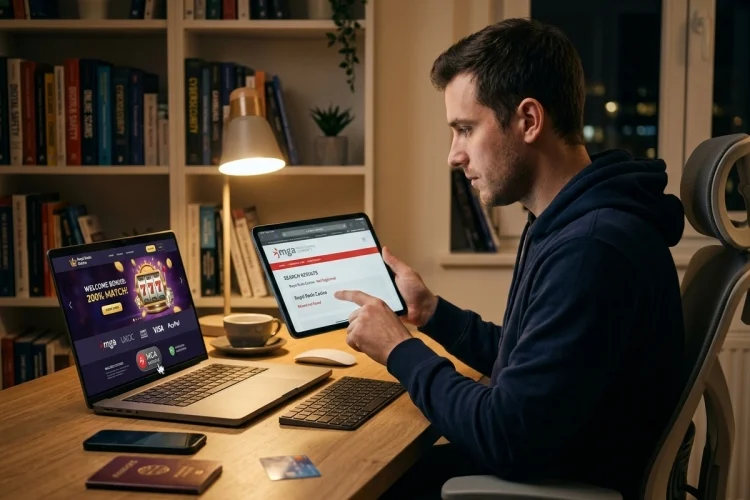
Do not accept a licence number or regulator logo without checking it. Search the regulator’s database using the business name and exact domain.
The UK Gambling Commission says licensed businesses must display their licensing status and link to its register. The Malta Gaming Authority also offers a register searchable by company, status, URL, or service.
Read Account and Payment Rules
Review one-account limits, accepted countries, payment ownership, fees, and withdrawal conditions. Using another person’s card or creating multiple accounts may violate the terms.
Check whether withdrawals must return to the original payment method and whether further verification may be requested. Completing KYC early can prevent unresolved identity issues from appearing only when funds are withdrawn.
Strengthen Login Security
Create a unique password and enable MFA when available. CISA explains that multifactor authentication adds another identity check, making unauthorised access more difficult.
Never give a verification code to someone claiming to be support staff. The FTC describes such codes as an additional account-security key that should not be shared with callers or message senders.
Use Safer-Gambling Controls
Look for deposit limits, time-outs, session reminders, and self-exclusion. The Malta Gaming Authority describes player protection as a shared responsibility involving players, operators, and regulators.
Choose limits before the first deposit. Stop and seek support if gambling causes debt, secrecy, repeated loss-chasing, or distress.
Online Casino Registration requires more than entering personal details.
New players should understand KYC, prepare matching documents, review data practices, verify the licence, and study withdrawal rules before depositing. Strong passwords, MFA, and caution around phishing reduce avoidable security risks.
Use registration as a decision point, not an automatic commitment to play. If a website cannot explain why it needs information, how documents are protected, or who regulates it, leave the platform.
Proceed only where online gambling is lawful, set strict time and spending limits, and treat every deposit as entertainment expenditure that may be lost.