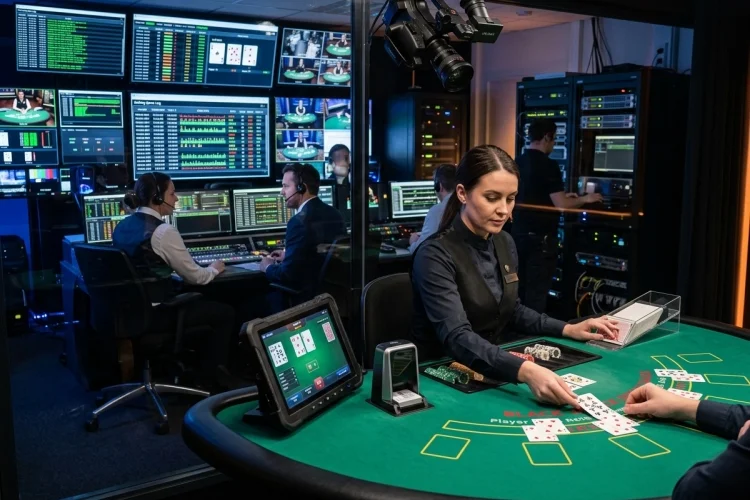

What Technology Powers Live Casino Games on Mobile Devices?
Watching a live blackjack dealer on a smartphone involves much more than placing a video player above a betting layout.
The system must deliver clear footage, display betting controls on a small screen, register every tap within a limited wagering window, and settle the round without confusing delays.
So, what technology powers live casino games on mobile devices? The answer includes adaptive video encoding, low-latency streaming protocols, content delivery networks, responsive HTML interfaces, real-time communication channels, cloud infrastructure, and secure account systems.
These components must continue working when users change screen orientation, switch networks, or experience temporary bandwidth reductions.
Mobile performance is especially challenging because connection quality can vary from one moment to the next. A player may move from stable Wi-Fi to a congested cellular network while a round is in progress.
The platform must handle that change without accepting late bets, displaying incorrect outcomes, or leaving an unresolved transaction. Technical standards therefore require clear interruption procedures and accurate synchronization between the live event and digital interface.
Video Encoding Reduces Data Requirements
Professional studio cameras produce video files that are too large to send directly to thousands of smartphones. The raw footage must first be encoded and compressed.
Encoding converts the video into a practical internet-delivery format. The system may create several versions of the same stream, such as high, medium, and lower resolution. A device can then receive the version most appropriate for its connection and screen.
AWS documentation describes a live-streaming workflow in which video is encoded in real time into smaller versions that can be distributed more efficiently.
Adaptive Bitrate Streaming Responds to Network Changes
Adaptive bitrate streaming allows the video player to change quality as bandwidth rises or falls. Instead of allowing the entire table to freeze, the player may temporarily receive a lower-resolution stream.
This is important for mobile users because cellular conditions can change rapidly. The device may have excellent bandwidth in one location but experience congestion or signal loss seconds later.
HTTP Live Streaming is widely supported across devices, while Low-Latency HLS extends the format to reduce delay for near-real-time experiences.
Why Lower Latency Matters
A normal entertainment stream can tolerate several seconds of delay. A live casino cannot tolerate the same delay as easily because wagers must close before the physical outcome becomes known.
Lower latency helps the visual countdown remain closer to the real betting period. The platform still relies on server-side timestamps and acceptance rules rather than the video alone.
WebRTC Supports Real-Time Communication
Some interactive systems use WebRTC or related real-time technologies to deliver media and application data with minimal delay. WebRTC defines browser APIs that allow video, audio, and generic data to move between browsers or other connected devices.
This technology is well suited to experiences where rapid interaction matters. However, operators may choose different protocols depending on the audience size, device support, infrastructure, and desired latency.
A large one-to-many broadcast may use a different architecture from a private video call. Live casino suppliers can also combine streaming protocols with separate data channels for bets, chat messages, timers, and results.
CDNs Bring Content Closer to Players
A content delivery network distributes video through a global collection of edge servers. This reduces the distance that data must travel between the original studio and the viewer.
CDNs also help a system scale. The studio sends its stream to the distribution infrastructure, which then serves large numbers of users without requiring the original server to create every connection directly.
Amazon CloudFront states that it uses globally dispersed points of presence and intelligent routing to deliver content with low latency. CDN services can additionally provide access controls, encrypted delivery, and protection against common traffic attacks.
Responsive Interfaces Fit Different Screens
The video is only one part of a mobile live casino table. The interface must also show betting positions, chip values, the player’s balance, accepted wagers, game history, chat, rules, and the time remaining.
Responsive web design rearranges these elements according to screen size and orientation. Controls may collapse into menus, while the betting layout can become scrollable or zoomable.
The most important financial information should remain visible and understandable. UK technical requirements state that customers must receive sufficient information about transactions and betting options.
Real-Time Data Channels Process Bets
A player’s wager is not transmitted through the video feed. It travels as structured data to the gaming platform, usually through an authenticated web connection.
The server checks the account balance, table limit, wager value, and betting deadline. When accepted, the system records a unique transaction and sends confirmation back to the interface.
Persistent communication methods such as secure WebSockets can support rapid two-way updates. Security guidance recommends encrypted wss:// connections because unencrypted WebSocket traffic can be intercepted or altered.
Cloud Systems Support Scale and Availability
Live casino demand can change considerably throughout the day. Cloud infrastructure and scalable servers help platforms handle increases in viewers, connections, and transaction volume.
Separate services may manage video delivery, game logic, player accounts, payments, chat, reporting, and monitoring. Dividing the system into specialized components can make it easier to scale heavily used functions without rebuilding the entire platform.
Cloud monitoring also helps technical teams identify stream failures, increased latency, abnormal disconnections, or overloaded services. The exact architecture differs among suppliers, so cloud use should not be assumed to follow one universal design.
Handling Connection Interruptions
Mobile connections sometimes fail during a round. A responsible platform needs predetermined rules for deciding whether a wager was accepted and how incomplete games are resolved.
GLI-19 requires live game information to describe procedures for interruptions involving audio, video, data flow, or server problems. It also recognizes that both human and system errors may occur.
The authoritative record should come from the gaming platform rather than the last frame visible on the phone. Reconnecting should display the settled result or refund status without creating a duplicate wager.
Encryption Protects Account and Wager Data
Transport Layer Security protects information moving between a user’s device and the service. HTTPS and other TLS-protected channels provide confidentiality, authentication, and data-integrity controls.
NIST describes TLS as a protocol used to protect information transmitted across the internet. Secure configurations help prevent undetected modification and unauthorized reading of data in transit.
Encryption cannot make an unlicensed operator trustworthy. Players must still check who operates the platform, where it is regulated, and how disputes are handled.
Mobile live casino technology combines video production with real-time transactional software. Encoding compresses studio footage, adaptive streaming adjusts quality, and low-latency delivery keeps the video close to the physical action.
CDNs distribute content globally, while responsive interfaces make complicated betting layouts usable on smaller screens. Separate data channels process bets, balances, chat, timers, and results.
Cloud services provide scalability, and encryption protects sensitive information moving between the device and platform. Interruption procedures and independent testing help ensure that temporary connection problems do not create uncertain financial outcomes.
Use only licensed platforms with clear game rules and transaction histories. A smooth mobile experience can make participation convenient, but it can also make gambling easier to access repeatedly, so set spending and time limits before opening a table.